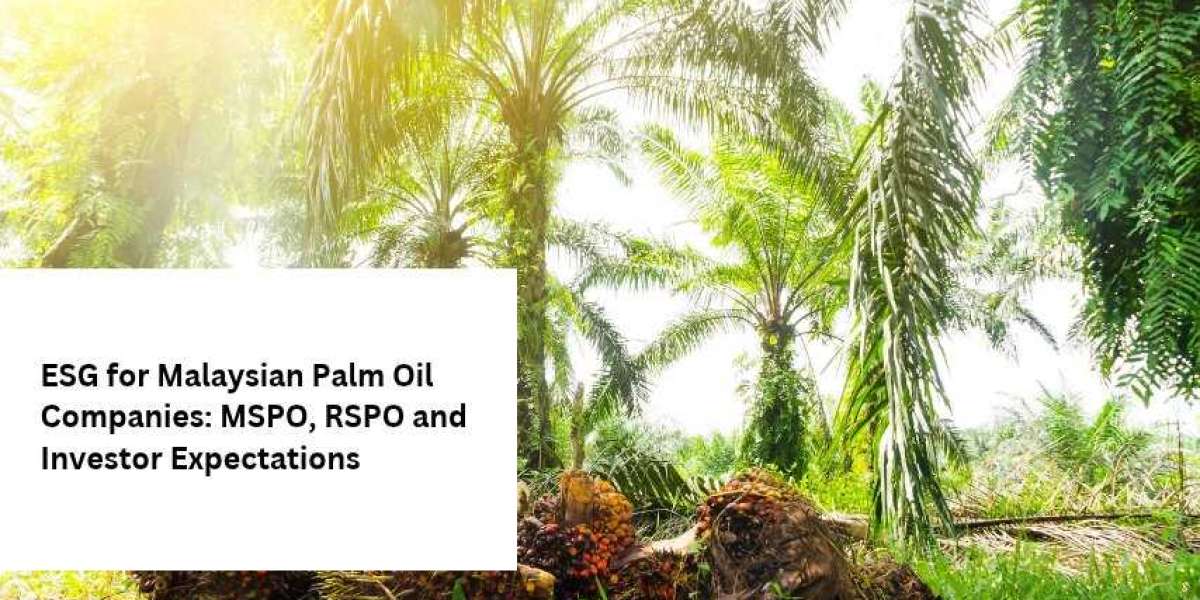
Malaysian palm oil companies meet ESG expectations by combining mandatory national certification (MSPO), voluntary international certification (RSPO where buyers require it), credible traceability and transparent disclosure that investors and lenders can test. Certification is the entry ticket, but investors increasingly look beyond it to deforestation controls, labour practices, governance and climate data.
The sector has strong reasons to take this seriously. MSPO 2.0 took effect on 1 January 2025 with stricter traceability and ethical requirements, and the European Union's deforestation regulation (EUDR) is scheduled to apply from 30 December 2026 for large and medium operators, with later dates for micro and small ones. At the same time, Malaysia's National Sustainability Reporting Framework (NSRF) is bringing ISSB-based climate disclosure to listed companies in phases. This article explains how MSPO and RSPO differ, what the EUDR changes, what investors tend to ask, where an ESG consultant can help, and where industry voices disagree. Regulatory dates have moved several times, so readers should confirm current positions with the relevant authorities before acting.
What Is MSPO and Is It Mandatory for Malaysian Palm Oil Companies?
The Malaysian Sustainable Palm Oil (MSPO) scheme is Malaysia's national certification standard for the palm oil industry, and it has been mandatory for the sector since 2020. It covers sustainability, traceability and legal compliance across plantations, smallholdings and other supply-chain actors.
What Changed With MSPO 2.0?
MSPO 2.0 (MS2530:2022) came into effect on 1 January 2025 and replaced the original 2013 standard. It introduces stricter requirements on traceability, environmental protection and ethical practices, and extends mandatory certification to palm oil dealers. Certification audits are carried out by independent, accredited bodies.
How Widespread Is MSPO Certification?
Recent industry reporting indicates that roughly 90% of Malaysian oil palm plantations are MSPO-certified, with the Malaysian Palm Oil Board offering grant assistance to smallholders seeking certification. Smallholders produce around 40% of national output, so their coverage matters for the integrity of the whole scheme. Exact figures change, so check current data from the certification body.
What Is RSPO and How Does It Differ From MSPO?
The Roundtable on Sustainable Palm Oil (RSPO) is a voluntary, multi-stakeholder international certification system, whereas MSPO is a national, mandatory scheme. Many Malaysian companies hold both because some global buyers and investors specifically ask for RSPO.
Aspect | MSPO | RSPO | EUDR (EU law) |
Nature | National, mandatory scheme | Voluntary international scheme | Binding EU regulation |
Main focus | National sustainability, legality, traceability | Environmental and social standards agreed by stakeholders | Deforestation-free and legal sourcing, due diligence |
Who it affects | Malaysian growers, mills, dealers | Members and certified entities seeking market access | Operators and traders placing covered products on the EU market |
Role for investors | Baseline credential | Often a premium credential for global buyers | Market-access and compliance risk |
Why Do Some Companies Hold Both MSPO and RSPO?
They hold both because buyers and financiers differ in what they accept. MSPO demonstrates compliance with the national framework, while RSPO is widely recognised by multinational brands and some investors. Industry voices often describe the two as complementary, with RSPO reaching organised plantation groups quickly and MSPO reaching smallholders at scale.
Is RSPO Better Than MSPO?
Not in any absolute sense. The better fit depends on the customer and the market. Some buyers treat RSPO as a stronger signal, while Malaysian policymakers argue that MSPO is rigorous and legally backed. Companies should ask their key buyers and lenders which credentials they require and avoid paying for certification that no customer values.
How Does the EUDR Affect Malaysian Palm Oil Companies?
The EUDR requires operators placing palm oil and other covered products on the EU market to show that they are deforestation-free and legally produced, using traceability data and due diligence. For Malaysian exporters, the main impact is the need for plot-level traceability and documentation that EU buyers can rely on.
When Does the EUDR Apply?
Following a further postponement agreed in late 2025, the regulation applies from 30 December 2026 for large and medium operators and from 30 June 2027 for micro and small operators. The European Commission's May 2026 simplification review reportedly confirmed no further delay, though it proposed changes to ease compliance. Timelines and details can shift, so verify the latest position.
Does MSPO or RSPO Certification Satisfy the EUDR?
Not automatically. Certification can support risk assessment and evidence collection, and reports indicate the EU has acknowledged MSPO's role as a compliance tool, but the legal duty of due diligence stays with the EU operator, who needs geolocation and supply-chain data. A certificate is useful evidence, not a substitute for traceable data.
What Do Investors and Lenders Expect From Palm Oil Companies on ESG?
Investors and lenders expect credible evidence of deforestation-free supply chains, fair labour practices, sound governance and measured climate performance. They look for data, policies and independent verification more than for general statements.
Which Environmental Issues Do Investors Prioritise?
Common priorities include deforestation and peatland practices, greenhouse gas emissions (including methane from mill effluent), water use, biodiversity, fire prevention and waste management. Investors increasingly ask for emissions data and targets aligned with the ISSB-based approach now being phased in under the NSRF.
Which Social Issues Draw the Most Scrutiny?
Labour conditions, particularly for migrant workers, are a major focus, along with recruitment practices, wages, housing, health and safety, and smallholder inclusion. Malaysia's National Action Plan on Business and Human Rights has also raised the profile of labour rights and ethical conduct as national ESG priorities.
Which Governance Issues Matter?
Investors examine board oversight of sustainability, anti-corruption controls, grievance mechanisms, land-rights processes and the reliability of reported data. Weak governance can undermine a company's environmental claims, since traceability depends on controls that actually work.
How Can a Palm Oil Company Prepare Step by Step?
A palm oil company can prepare by mapping its supply base, strengthening traceability, aligning with the certifications its buyers need, building reliable ESG data and documenting policies and grievance processes. The work is easier when sequenced.
How Should a Company Start With Traceability?
Start by mapping mills, plantations, dealers and smallholder suppliers, then collect plot-level location data and legal documents. Digital record-keeping reduces errors. Malaysia has been developing a national traceability system, and companies should check how their systems can connect to it.
How Should a Company Build ESG Data and Policies?
Set up a data system for emissions, water, waste, workforce and safety indicators, with named owners and documented methods. Publish policies on no deforestation, no peat development and responsible labour, and make sure they match field practice. An experienced ESG consulting specialist can help design the system, but leadership must own the content.
When Does a Palm Oil Company Need an ESG Consultant?
A palm oil company needs an experienced ESG consultant such as Wellkinetics when the work is technical, time-bound or externally scrutinised, such as preparing for EUDR-related due diligence, calculating a greenhouse gas inventory, aligning reports with NSRF and ISSB-based expectations, or responding to a major investor or lender review.
What Can an ESG Consultant Do for a Plantation Business?
An ESG consultant can run gap assessments against MSPO, RSPO and buyer requirements, design traceability and data workflows, calculate emissions, draft policies, prepare disclosures and train staff. A good ESG consultant also tests claims for accuracy to reduce greenwashing risk, meaning exaggerated sustainability claims that cannot be evidenced.
How Can Smaller Operators Control Costs?
Smaller operators can start with MSPO requirements and available government support, then add targeted help only where a buyer or lender requires it. Request itemised quotes from an ESG consultant, define the scope in writing and keep routine data collection in-house.
Do Industry Voices Agree on How ESG Should Be Handled?
No. Producers, buyers, investors and civil society groups disagree on the weight of national versus international schemes, the burden on smallholders and the pace of regulation. Each view has a fair basis.
What Do Industry and Government Supporters of MSPO Argue?
They argue that MSPO is mandatory, legally backed and accessible to smallholders, and that it protects market access while keeping compliance costs manageable. They also stress that Malaysia has strong legal frameworks on land and deforestation.
What Do Critics and Cautious Observers Argue?
Critics, including some buyers and non-governmental groups, argue that national schemes should be independently benchmarked and that traceability and labour verification must be demonstrable in practice, not just certified. Some also note that compliance costs fall hardest on smallholders, who need support to avoid being excluded from supply chains.
Where Is the Common Ground?
Most parties accept that traceable data, credible audits and support for smallholders are essential. Disagreement mainly concerns which tools are sufficient and who should bear the costs. For companies, the practical response is to meet the standards their markets require and to keep evidence ready.
Frequently Asked Questions About ESG for Malaysian Palm Oil Companies
Is MSPO certification enough for investors?
Usually it is a necessary baseline, not a complete answer. Investors often also ask for emissions data, labour practices, traceability evidence and governance disclosures.
Do I need RSPO if I already have MSPO?
Only if your buyers, lenders or investors require it. Ask key customers which credentials they accept before committing to an additional certification.
Does EUDR apply to companies that do not export to the EU?
Not directly. However, customers, traders and refiners that supply the EU market may pass requirements down the chain, so non-exporters can still be affected indirectly.
How long does it take to prepare for EUDR-style traceability?
It depends on supply-chain complexity and data readiness. Companies with well-mapped suppliers and digital records can move faster, while those relying on many smallholders need more time and support.
Can a smallholder afford ESG compliance?
With support, often yes. Government grants, buyer programmes and industry initiatives exist to assist smallholders, though availability and terms change. An ESG consultant is rarely needed at individual smallholder level but may help mills and groups coordinate compliance.
Conclusion
The bottom line is to treat MSPO as the baseline, add RSPO where markets demand it, invest in traceability and data, and meet investor expectations with verifiable evidence. Use an ESG consultant for specific technical needs rather than as a substitute for management ownership.
The debate over national versus international schemes will continue, and it contains legitimate points on both sides. What is not in dispute is that buyers, regulators and financiers are asking for better data. Palm oil companies that keep accurate records, support their smallholder partners, avoid overstated claims and engage an ESG consultant where expertise is genuinely needed will be better placed as requirements tighten.
This article is for general information only and is not legal, financial or regulatory advice. Certification rules, EU regulatory dates and funding schemes change, so verify current requirements with the relevant authorities.