
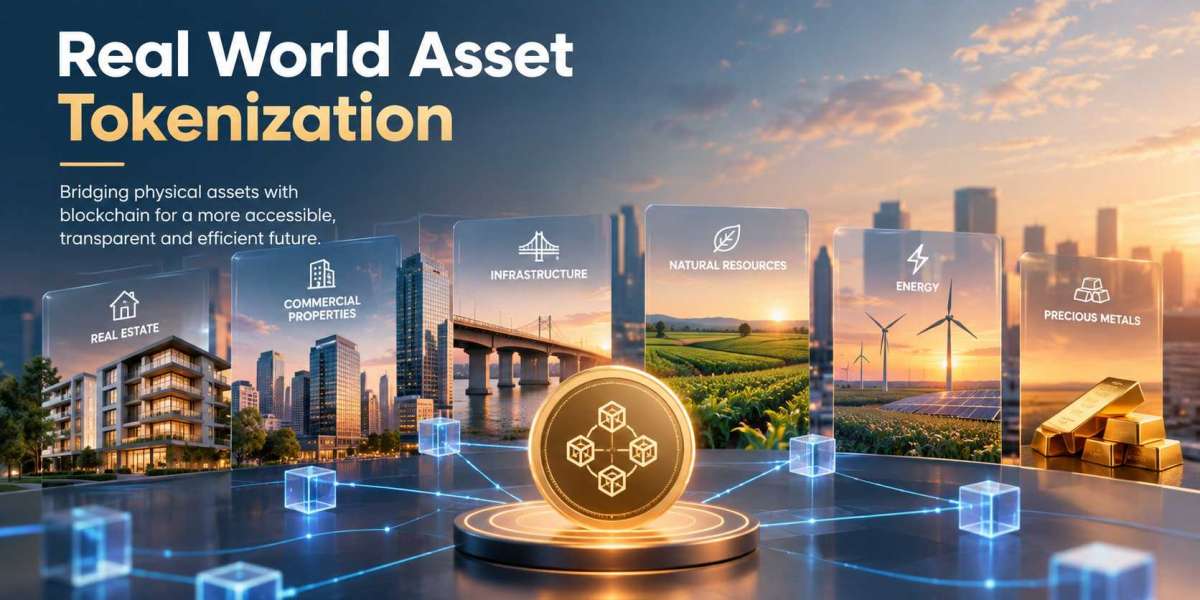
What if traditionally illiquid assets could become easier to access, manage, and transfer through digital financial infrastructure? Real-world asset (RWA) tokenization is bringing this possibility closer to reality by connecting physical and traditional financial assets with blockchain technology. From real estate and precious metals to private credit, infrastructure, and commodities, tokenization is creating new ways to represent asset ownership and contractual rights digitally.
As financial markets explore blockchain-based systems, RWA tokenization is gaining attention as a potential bridge between alternative investments and digital finance. It can help asset owners explore new funding models while giving eligible investors access to investment opportunities that have historically involved high capital requirements or complex processes.
What Is Real-World Asset Tokenization?
Real-world asset tokenization is the process of representing ownership interests, financial claims, or other rights associated with an asset as digital tokens on a blockchain. These tokens can be designed to represent a fraction of an asset, a share of its income, a debt obligation, or a contractual entitlement, depending on the legal structure.
For example, a commercial property valued at $5 million could be structured to offer 50,000 digital tokens, each representing a defined interest worth $100 at issuance. Investors might purchase tokens according to the offering terms rather than acquiring the entire property. However, the actual rights attached to each token depend on the legal agreements, ownership structure, and applicable regulations.
Real World Asset Tokenization does not automatically make an asset liquid or guarantee that its value will increase. Instead, it provides a digital framework through which asset-related rights can be recorded, managed, and potentially transferred.
How Tokenization Connects Alternative Investments With Digital Finance
Alternative investments often include assets outside conventional publicly traded stocks and bonds. These may involve real estate, private credit, infrastructure, commodities, and certain private-market opportunities. Such investments can require substantial capital, extensive documentation, and specialized administrative processes.
Blockchain-based tokenization can connect these assets with digital financial systems through several mechanisms.
1. Fractional Investment Opportunities
Fractionalization allows an eligible investment to be divided into smaller units, potentially lowering the minimum capital required to participate. Instead of purchasing an entire property or funding a large private-credit arrangement, investors may be able to acquire a smaller interest through a tokenized offering.
The benefit depends on the asset structure, minimum investment requirements, investor eligibility, and applicable laws. Fractional ownership can broaden participation, but it does not eliminate investment risks.
2. Digital Ownership Records
Traditional asset transactions can involve multiple parties, including custodians, administrators, legal professionals, and financial intermediaries. Tokenization can record relevant transactions and token balances on a blockchain, helping authorized participants verify transfers and maintain consistent records.
Smart contracts may automate certain activities, such as distributing eligible payments, enforcing transfer restrictions, or updating token balances. Nevertheless, legal ownership records and off-chain documentation may still be necessary to establish and enforce the underlying rights.
3. Potential Access to Secondary Markets
Alternative assets can be difficult to sell before maturity or the end of an investment period. Tokenization may support transfers through compliant secondary-market platforms, giving investors a potential route to exit their positions.
For example, an investor holding tokens linked to a private-credit investment might seek to transfer them to another eligible investor if the offering documents and trading venue permit it. Actual liquidity depends on buyer demand, market infrastructure, transfer restrictions, and regulatory requirements.
4. Integration With Digital Financial Services
Tokenized assets may interact with digital wallets, blockchain-based settlement systems, and certain decentralized finance applications. Where permitted and technically supported, this can create opportunities for new financial workflows involving collateral management, asset transfers, and settlement.
However, not every tokenized asset is compatible with decentralized finance. Legal enforceability, custody arrangements, valuation, compliance, and smart-contract security must be considered before connecting real-world assets to additional financial services.
Key Asset Classes Exploring Tokenization
RWA tokenization can be applied to different asset categories, each with distinct operational and legal requirements.
Real Estate
Commercial buildings, residential properties, and rental portfolios can be represented through tokens linked to ownership interests or rights in a legally established investment vehicle. Depending on the structure, investors may receive a share of rental income or potential proceeds from a property sale.
Private Credit and Fixed Income
Private loans, debt instruments, and other eligible credit products can be represented digitally. Smart contracts may support payment schedules, recordkeeping, and certain administrative functions, while credit assessment and borrower default risks remain central considerations.
Precious Metals and Commodities
Gold, silver, and selected commodities can be linked to digital tokens representing claims on specified quantities or interests in stored assets. Reliable custody, independent verification, redemption terms, and clear legal rights are essential to establish confidence in these arrangements.
Infrastructure and Renewable Energy
Infrastructure projects, energy facilities, and renewable-energy investments may explore tokenization to structure funding opportunities. Depending on the offering, tokens could represent equity interests, debt claims, or contractual rights linked to project revenues.
Private-Market Investments
Eligible private-market funds and other alternative investment structures may use tokenization to streamline certain investor administration and ownership-transfer processes. These products can still involve long holding periods, limited disclosure, valuation uncertainty, and restricted transferability.
The Technology Behind RWA Tokenization
A tokenization ecosystem combines blockchain infrastructure with the systems required to manage the underlying asset.
Blockchain networks provide the environment in which tokens are issued and transactions are recorded. The choice of network can affect transaction costs, scalability, interoperability, and privacy considerations.
Smart contracts define token-related rules and automate supported operations. These may include issuance limits, investor eligibility checks, transfer restrictions, and payment calculations. Contract logic requires careful testing and security reviews.
Digital wallets and investor interfaces allow eligible users to access their token holdings and interact with supported platforms. Depending on the offering, additional identity verification and transaction approval procedures may apply.
Asset administration and compliance systems connect digital records with legal documents, asset valuations, investor information, and reporting requirements. This connection is especially important when the underlying asset exists outside the blockchain.
Development providers, including INORU, are part of the broader ecosystem supporting blockchain-based tokenization infrastructure. The suitability of any provider depends on the project's technical requirements, regulatory environment, asset category, and operational model.
Benefits and Challenges of RWA Tokenization
Tokenization can offer several potential advantages:
More flexible investment structures: Assets can be divided into defined investment units with specific rights and conditions.
Improved transaction records: Blockchain-based records can support traceability and reconciliation.
Potentially broader investor access: Smaller investment units may reduce certain capital barriers for eligible participants.
Automated administration: Smart contracts can reduce manual work for supported processes.
New financial connections: Tokenized assets may connect with digital settlement systems and compatible financial platforms.
Despite these opportunities, tokenization also faces important challenges. Regulatory requirements vary across jurisdictions and asset classes. Legal ownership must be clearly established, and investors need reliable information about asset valuation, fees, risks, and redemption or transfer conditions.
Other concerns include cybersecurity vulnerabilities, custody failures, limited market liquidity, interoperability issues, and dependence on service providers. Tokenization can improve parts of an investment process, but it cannot remove the underlying economic and legal risks of an asset.
What Businesses Should Consider Before Tokenizing Assets
Organizations exploring RWA tokenization should begin by identifying the rights they intend to represent. Ownership interests, revenue claims, debt obligations, and redemption rights require different legal and technical arrangements.
Businesses should also evaluate the asset's eligibility, establish appropriate custody and verification procedures, and determine which investor groups can participate. The platform must support relevant compliance checks, secure wallet operations, transaction monitoring, reporting, and asset servicing.
Smart-contract audits and independent security assessments are important before deployment. Organizations should additionally plan for ongoing maintenance, dispute resolution, investor communications, and procedures for handling changes to the underlying asset.
A successful tokenization project requires coordination between legal advisers, asset managers, technology specialists, and financial service providers. The blockchain is only one part of the overall investment structure.
Conclusion
Real-world asset tokenization is creating new connections between alternative investments and digital finance. By representing asset-related rights through blockchain-based tokens, businesses can explore fractional investment structures, more traceable transaction records, automated administration, and potential access to compliant digital markets.
Its long-term value will depend on more than the technology itself. Clear legal rights, reliable asset backing, investor protection, secure infrastructure, and sustainable market demand will determine whether tokenization delivers meaningful improvements.
As traditional financial institutions and blockchain developers continue exploring these models, RWA tokenization may become an increasingly important component of digital financial infrastructure, linking established asset markets with new ways to manage and exchange investment rights.



